
The Journal
The Art of the Auckland Night
A study in celestial geometry, silver light, and the architecture of after-dark culture — written from the room at Luna Place.
Essay · 6 min read
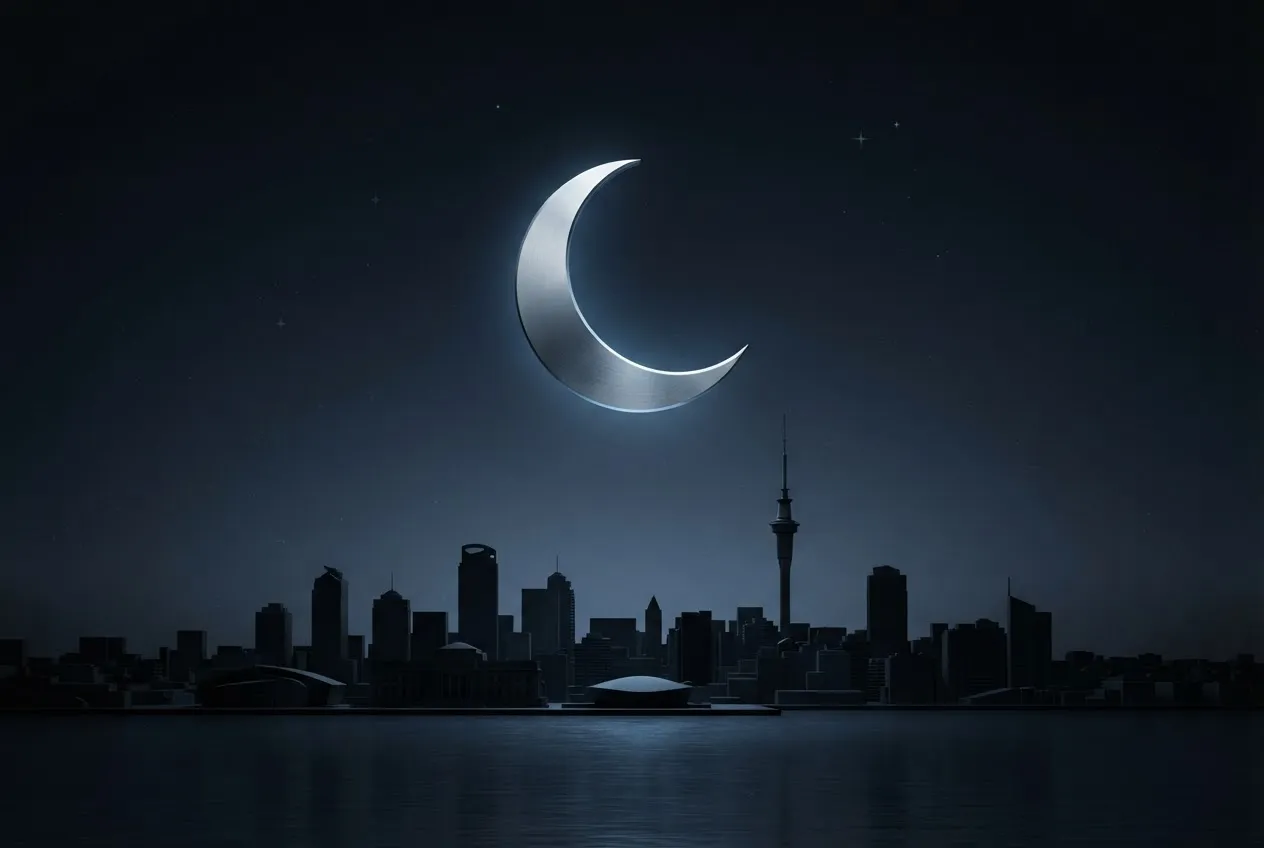
Auckland sits between two harbours, and at night the city folds inward — the harbour light dims, the towers go silver, and the streets below Federal Street take on the low, considered tone of a room before the music begins. Luna Place was built for that hour.
Celestial geometry
The architecture of the lounge is drawn from a single idea: the moon as a structural element. Lighting is not decorative but load-bearing. Cold silver beams hold the ceiling; moonlight-blue washes form the walls. Every surface — black marble, navy velvet, sterling trim — is chosen to receive light without reflecting it back. The room absorbs and holds.
The still crowd
The most studied nightclubs are not loud. They are architectural. At Luna Place the crowd is composed as a still life — silhouettes held against blue light, motion caught rather than encouraged. The DJ booth is a rig, the dance floor a geometric plane. The night unfolds as a structure, not a sequence.
Service as restraint
Bottle service is presented, not poured. Cocktails are composed as objects on black marble — smoke, silver garnish, cold distillate. A dedicated host attends each enclosure without entering it. The discipline is the luxury; the absence of motion is the point.
The lunar gateway
To reserve is to pass through a doorway. There is no phone, no line, no noise — only a form, an address, and an evening held against your name. The night in Auckland rewards those who arrive prepared, and Luna Place exists for exactly that preparation.